Category: Uncategorized

  • How the hell did we pull this off?

    How the hell did we pull this off?

    Wir hatten ein Problem.

    Unser guter Freund Konstantin hier hat nämlich Retro-Gaming-Turniere veranstaltet.

    Retro-Gaming-Turniere sind großartig! Da spielen viele nette Menschen alte Spiele auf alter Hardware gegeneinander, hangeln sich einem Turnierbaum entlang und küren einen Sieger oder eine Siegerin. Und am Ende gibt es Pizza für alle.

    Nach einem Turnier hat Konstantin aber mal gesagt: Retro-Gaming-Turniere sind großartig, aber die alte Hardware ist so ein Problem. Sie ist schwer, sie ist fehleranfällig, sie ist laut, sie ist langsam – sie ist leider alt. Und mein Auto kann auch nur so und so viele Maschinen tragen. Das ist nicht praktikabel.

    Also hat Enno gesagt: Dann müssen wir wohl oder übel emulieren. Wir nehmen Raspberry Pis, drucken uns ein nettes Gehäuse, stecken Controller dran und spielen die Spiele so.

    Dann hat aber Basti gesagt: Das ist zwar praktisch, aber wo bleibt der Charme? Die fiependen Netzteile, die lauten Laufwerke, das alte Plastik, das Feinjustieren der Kabelanschlüsse, das Pusten in die Cartridges. Das gehört doch auch dazu! Wenn wir schon emulieren, dann muss das Style haben!

    Dann hat Arne gesagt: Lasst uns wenigstens ein eigenes Gehäuse bauen!

    Dann hat Konstantin gesagt: Und wenn wir schon dabei sind, können wir nicht wenigstens die Cartridges beibehalten? Richtig physische Cartridges, die richtig schön haptisch in einen Slot passen und ein Spiel direkt starten? So wie früher?

    Und zu all dem hat Enno gesagt: Ok. Dann lasst mich mal machen, ich wollte immer schon mal wissen, wie man PCBs designt.

    Dann hat Konstantin gesagt: Alles klar, ich bau schon mal ein Konsolengehäuse aus Lego-Steinen zusammen.

    Und außerdem hat Konstantin gesagt: Ich hab hier noch so ein Logo rumliegen. Dann hat Arne gesagt: Wir haben ein Logo! Dann hat Enno gesagt: Ich bin mit Version 1 fertig.

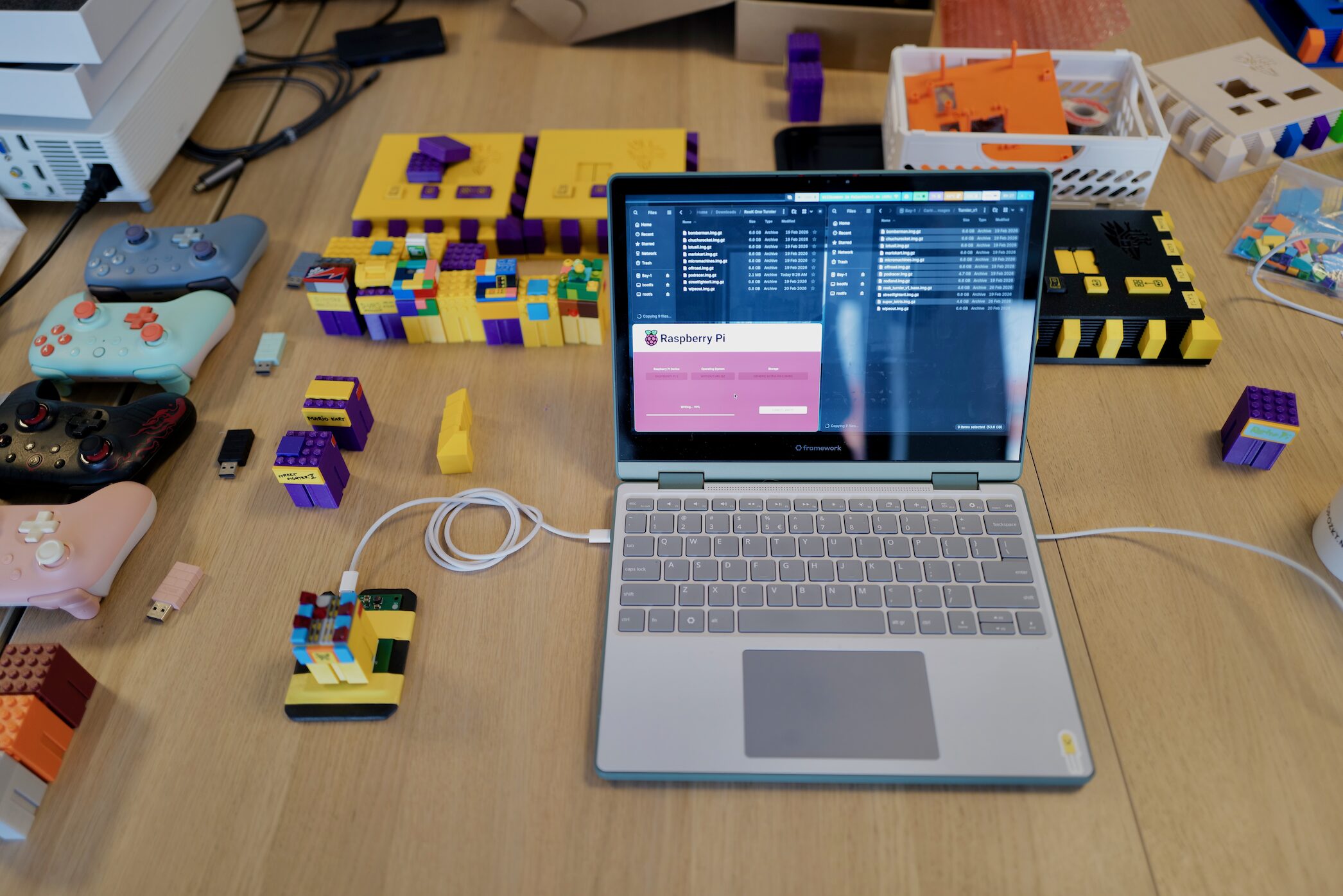
    Proof of Concept. Raspberry Pi auf eigenem PCB!

    Dann hat Enno gesagt: Wir brauchen einen Namen für das Logo! Dann hat Arne gesagt: Die Saatkrähe auf Englisch heißt Rook! Dann haben alle gesagt: Wir haben einen Namen und ein Logo.

    Dann hat Enno gesagt: Ich habe ein Gehäuse gedruckt und MK2.

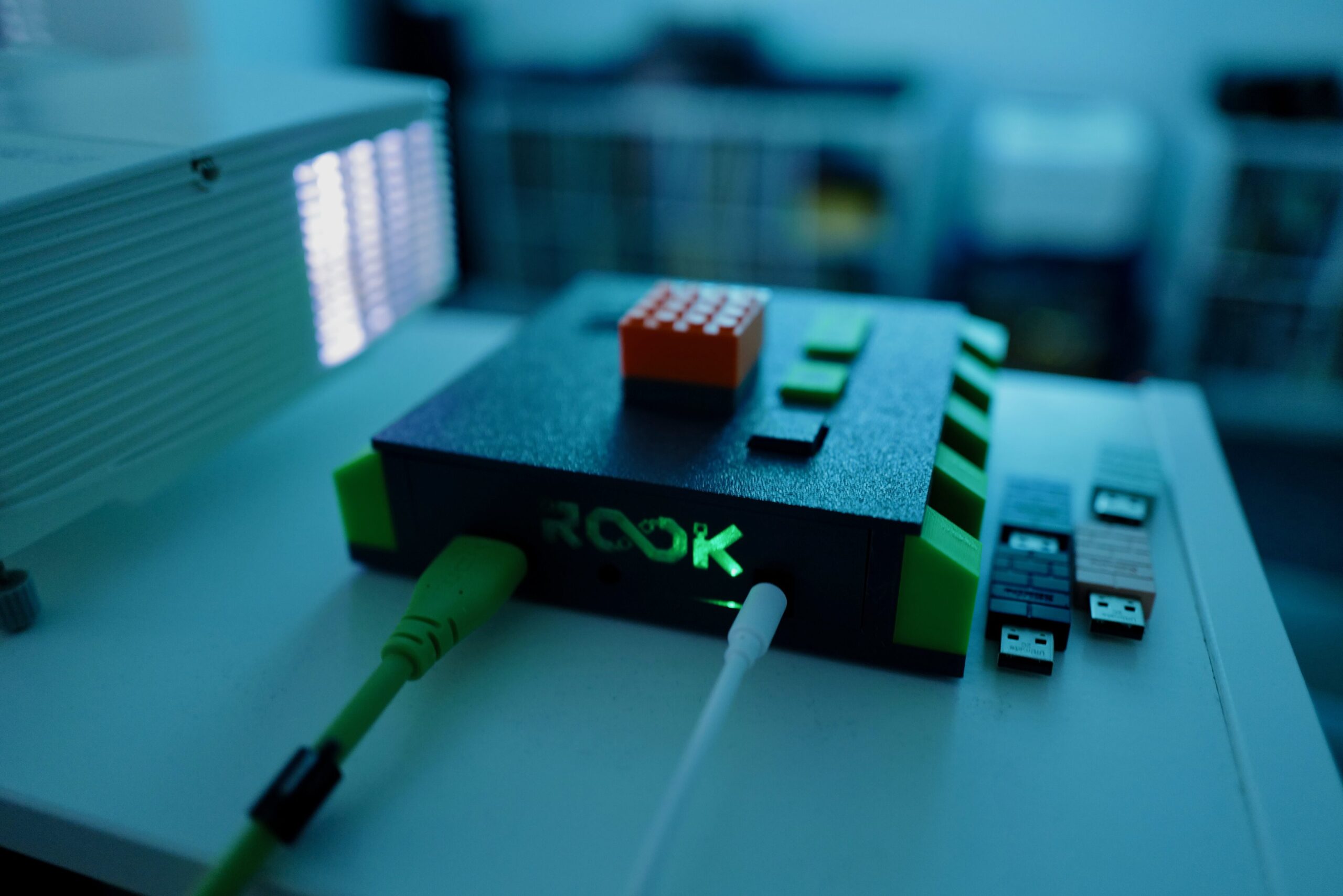
    Prototyp. Raspberry Pi startet durch Einsetzen der Cartridge, aber noch nicht von der Cartridge.

    Dann hat Basti gesagt: Jede Konsole hat ihr eigenes Spiel. Ich bau mal ein Spiel. Dann hat Konstantin gesagt: Ich hab mal am Gehäuse weitergearbeitet. Dann hat Arne gesagt: Ich hab mal eine Website aufsetzen lassen. Dann hat Alex gesagt: Ich hab mal ein Newsletter-Formular angelegt. Dann hat Enno gesagt: Ich hab ein Gehäuse gedruckt und MK3.

    Durchbruch: Raspberry Pi startet von der Cartridge.

    Dann hat Arne gesagt: Ich will mal Konstantins Wohnung sehen. Dann hat Enno gesagt: Ich auch. Dann hat Konstantin gesagt: Wir machen ein Mini-Retro-Gaming-Turnier. Dann ist Basti auch einfach mitgefahren. Dann haben alle festgestellt: R∞k ist großartig, aber braucht mehr Power!

    Dann hat Enno gesagt: Ich hab ein neues Gehäuse gedruckt und MK3.1.

    Mehr Power: Konsole mit Raspberry Pi 5!

    Dann hat Arne gesagt: Ich organisier mal ein neues großes Retro-Gaming-Turnier. Dann hat Enno gesagt: Da spielen wir dann unser Spiel. Dann hat Konstantin gesagt: Mehr Farben. Dann hat Basti gesagt: Mehr Noppen. Dann hat Alex gesagt: Mehr Content! Dann hat Arne gesagt: Magnete! Dann hat Markus gesagt: R∞k Velvet Red Edition!

    Dann…

    Dann war R∞k One. Das erste Retro-Gaming-Turnier nur mit R∞k-Konsolen.

    Ziel erreicht! Problem gelöst.

    Dann war Erschöpfung.

    Und dann war ein Entschluss.

    Wir bauen unsere eigene Konsole weiter.

    MK4. R∞k für alle.

    Wir fangen gerade erst an.

    Folgt uns, verfolgt die Geschichte, hebt die Hand, wenn ihr Interesse habt.

    r∞k.computer

    YouTube/@Rook.Computer
  • RooK Console RooK-Letter March 2026 – The Retro Gaming Console Levels Up Again

    RooK Console RooK-Letter March 2026 – The Retro Gaming Console Levels Up Again

    Our first Newsletter in English: and watch out! the image is generated with Nano Banana and there is SO MUCH WRONG with it, that we had to keep it, because it’s fun. We were just joking: Who finds the most errors in the pic wins something 🙂

    What’s been happening, what’s coming next?

    Hey there and welcome to the very first RooK Newsletter!

    From now on we’ll be dropping a monthly update right here a little peek behind the curtain, the stuff we’re currently working on, and all the things we’re planning for the future.

    The year has already kicked off in style with our first ever official RooK Tournament. Lots of games, even more people, and an absolutely great vibe all around. For us it was also a chance to introduce the RooK project to a wider audience. Usually it’s just us passing the console around, so we were genuinely curious what people outside the core team would think. It was also a fantastic opportunity to hunt down quirks and bugs that we can squash in the next iteration.

    But before we get into the new hardware version “Mk4” – let’s rewind a bit:

    What even is RooK, and how did this whole thing happen?

    It all started with us organizing retro gaming tournaments (on original hardware, with CRT monitors) because old games are quick to pick up and perfect for competitive play. Seriously, even if you’re holding the controller upside down: anyone can join in. At one of our more recent tournaments though, we realized that the high-pitched whine of the monitors and the loading times were actually becoming a problem.

    So we asked ourselves: could we build our own console from scratch, custom electronics and all? Against all expectations, that very first prototype “Mk1” actually worked. Cue an immediate and very passionate debate about what the console should be and how it should work, including the decision that games should run on cartridges.

    The first design was built out of LEGO bricks, and the second and eventually functional third prototype followed. A small tournament served as its baptism by fire. The response was so good that another iteration was inevitable – the current version, Mk3.1.

    Here’s our Konstantin with a tongue-in-cheek breakdown of the setup and the original design idea:

    One thing is clear: there will be a Mk4, and it’s being designed and sketched out as we speak. Power supply has been our biggest headache so far, and the Mk4 is finally going to tackle that head-on. We’re staying loyal to the round power connector, as is tradition, but if you want to use a modern power supply, adapters will make that happen. We’re also adding a USB port to the back. And a network port. We’re going full speed on the Mk4 and want to finish it this year – and of course put it through its paces properly.


    Community & Content


    Events

    A little overview of cool (retro) gaming events coming up:


    Games

    Topic of the month: kid-friendly beat-’em-ups. Brawling, scrapping, and general mayhem – but without the blood. All virtual, all in good fun!

    ClayFighter (SNES, 1993) Charming animations and completely unhinged characters. The fighting feels a little clunky sometimes, but honestly? That’s part of the fun.

    Teenage Mutant Ninja Turtles – Turtles in Time (SNES, 1992) When it comes to violence-without-blood, the Turtles are basically the gold standard. They carry deadly weapons everywhere and somehow never actually use them. Perfect.

    The Sword Fighting Sequence from Monkey Island (PC, 1990) Not a fighting game, strictly speaking. But still. The pen is mightier than the sword.


    Got a suggestion for next month’s game theme? Let us know!

    Until next time, The Rooksters

    askmeabout@rook.computer

     https://www.rook.computer